
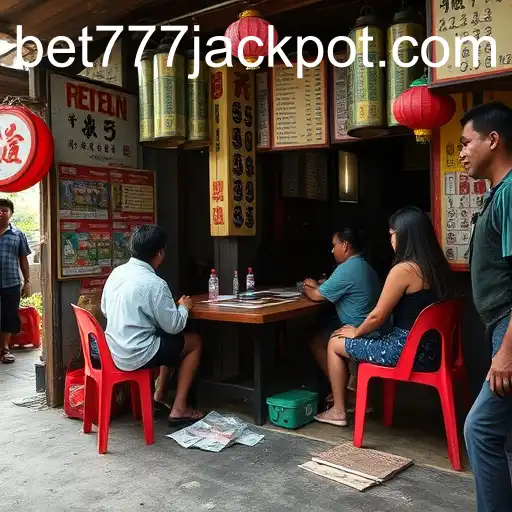
BET777 | Understanding the Enduring Allure of Jueteng in the Philippines
BET777’s An in-depth exploration of jueteng, an illicit numbers game in the Philippines, examining its history, economic impact, political entanglements, and evolution into digital platforms like BET777.
The Intricacies and Allure of Jueteng in the Philippines
Jueteng, an illicit numbers game profoundly embedded in Filipino culture, has persisted for decades despite legal prohibitions. Its prevalence and significance in Philippine society reflect a complex web of social, economic, and political factors, appealing to the masses across various regions.
Roots and History of Jueteng
The origins of jueteng trace back to the Spanish colonial era when gambling was already deeply rooted in local societies. Over time, jueteng evolved, solidifying its place as a traditional and widespread form of betting in the Philippine archipelago. Its name derives from the Hokkien Chinese words 'hui' and 'teng,' meaning 'flower' and 'a better,' which alludes to its early associations with the Chinese gambling community in the country.
The Game's Mechanics
The mechanics of jueteng are simple, attracting participants from all walks of life. Players choose a combination of numbers from 1 to 37, with bets placed through cobradors who collect the wagers. Jueteng draws are typically conducted twice a day, with winners receiving a payout considerably higher than their original stake. The game's simplistic nature is highly appealing, making it accessible to the ordinary individual seeking a low-cost, high-reward gambling opportunity.
Jueteng’s Economic Impact
Despite its illegal status, jueteng continues to thrive due to the economic advantages it offers to various stakeholders. For bettors, particularly within low-income communities, jueteng represents a small glimmer of hope for financial gain. The funds generated provide a semblance of economic stability for bet collectors and draw operators. However, its clandestine operations often funnel money toward illegal entities and perpetuate systemic corruption, presenting a significant challenge to governance and law enforcement.
The Complex Web of Politics and Jueteng
Jueteng's entrenchment in Philippine politics cannot be understated. It has been wielded as both a tool and a weapon, leveraging influence and fueling campaigns. Historically, numerous political figures and local government officials have been implicated in jueteng scandals, illustrating the pervasive nature of its influence. In many cases, those benefiting from the industry have been accused of wielding their power to shield criminal organizations from legal repercussions, thus perpetuating a cycle of impunity.
Efforts to Eradicate Jueteng
The Philippine government has implemented various measures attempting to eradicate jueteng, with limited success. Through the years, both legislative and police action have been employed, but operators frequently adapt, migrating operations and inventing new ways to circumvent enforcement. Proponents of legalizing and regulating the numbers game argue that doing so could eliminate police corruption associated with its suppression and instead redirect proceeds toward public welfare projects.
From Jueteng to BET777: The Digital Shift
In the age of the internet, jueteng has morphed into new digital formats such as 'BET777,' which offers an online platform for staking bets. This transition poses new regulatory challenges but illustrates jueteng’s ability to adapt and survive by harnessing technology's pervasive reach. Online betting taps into a younger, tech-savvy demographic while providing anonymity that shields operators and players from the watchful eyes of authority. The rise of platforms like BET777 also highlights the need for updated regulatory frameworks capable of encompassing and managing digital betting activities.
The Social Fabric and Cultural Resonance of Jueteng
Beyond economic and political dimensions, jueteng remains woven into the social fabric of the nation. In many localities, the game is a communal event, contributing to neighborhood camaraderie and offering a shared pastime for participants. Its cultural resonance reinforces jueteng's persistence, ensuring its continuation despite ongoing efforts to eliminate it.
The Road Ahead
As jueteng continues to evolve and adapt to new environments and technologies, tackling its pervasive presence poses a significant challenge. Whether through innovative legal frameworks, community engagement, or technology-driven solutions, the path to addressing this multifaceted issue remains a subject of national discourse in the Philippines. Understanding jueteng’s enduring allure fundamentally requires examining the broader social and economic systems at play, shaping its enduring prominence.
